We
get a lot of questions about the topic of drum tuning and
drum heads and thought a basic article about the topic would
be beneficial to our members and readers. This short history
of heads will give you an idea of what type of heads to get
if you are trying to match a certain style of drumming.
The
sound of drums has changed drastically over the years and
a lot of the changes can be attributed to the advancement
of technology and the trends in music during specific eras.
Early
on the "Drum Set" was called the "Outfit".
It is has also been called the "Traps Set", "Drum
Kit", and shortened to just "Kit". In the early
to mid 1900's prior to that there was no Outfit's cataloged.
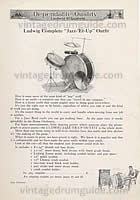
Our first catalog image of an Outfit was pictured in the 1918
Ludwig catalog. Prior to that you could see snare drums and
bass drums but not a complete Outfit for purchase.
(If you have an earlier example prior to 1918, please send
it to us)
During
this time period the drums all had calf skin heads which were
difficult to tune and keep tuned. They were temperamental
and changes in humidity affected the heads. To compensate
for changes drummers would put light bulbs in the drums to
try and keep the heads at a constant temperature and keep
the heads tight.
Drums
from this era had a specific sound which would have been more
of a muddled sound and not crisp, think of Gene Krupa working
that floor tom and really beating out the sound. Such a raw
sound that really got people dancing!
This
sound carried through the 20's, 30's and 40's and then in
the mid 50's mylar heads were introduced. Evans and Remo each
of which claim to be the original inventor of mylar drum heads
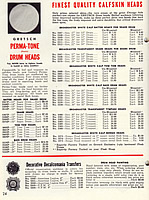
developed successful companies making heads. Below in Photo
A you will see the 1958 Gretsch catalog introducing
the new heads and listing all of its benefits.
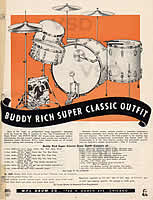
1948
WFL Catalog Page |
|
Big name drummers playing
WFL drums! |
1958
Gretsch Catalog Introducing New heads. Gretsch Perma-Tone
Heads |
|
Photo
A |
Mylar
heads held tuning and were not affected by temperature like
calf skin heads. Also, they could be tuned differently and
the sound of the drummer started to get cleaner with higher
tuning. Think of drummers like Buddy Rich and Joe Morello
crafting great solos on the toms.
Then
the 60's started rolling in and drummers were looking for
a deeper flatter sound. This is when drummers were stuffing
pillows and towels in bass drums and using tape on the toms
and snare drums.
In
the 70's and 80's drum sets were getting bigger and heads
were changing to pinstripe and other heads that had muffling
directly in the head. Pinstripe, oil and 2-ply heads created
the deeper flatter sounds that they were looking for around
that time.
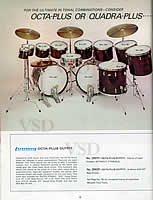
1975
Ludwig Catalog Page |
|
Larger
drums and bigger drum sets.. |
And
now drummers are going back to the open sounding drums with
basic single ply heads. No muffling and allowing the drums
to ring and resonate. It is all about suspension tom systems,
shell isolation and crisp cut bearing edges.
So,
now that we briefly covered the drums and heads, what sound
are you trying to achieve? What style of music are you playing
or trying to sound like? Knowing this will determine the heads
and tuning you want to try and match.
In
the next article we will go into more detail about how to
tune a drum and the best tuning for the sound you want to
achieve.
The Drum Experts
|









 : thedrumexperts.com : All rights reserved :